Choosing the right wholesale Particle Board is crucial for any project. According to Mark Thompson, a renowned expert in the Particle Board industry, "Quality should never be compromised, especially when it comes to foundational materials." His insight highlights an essential truth in construction.
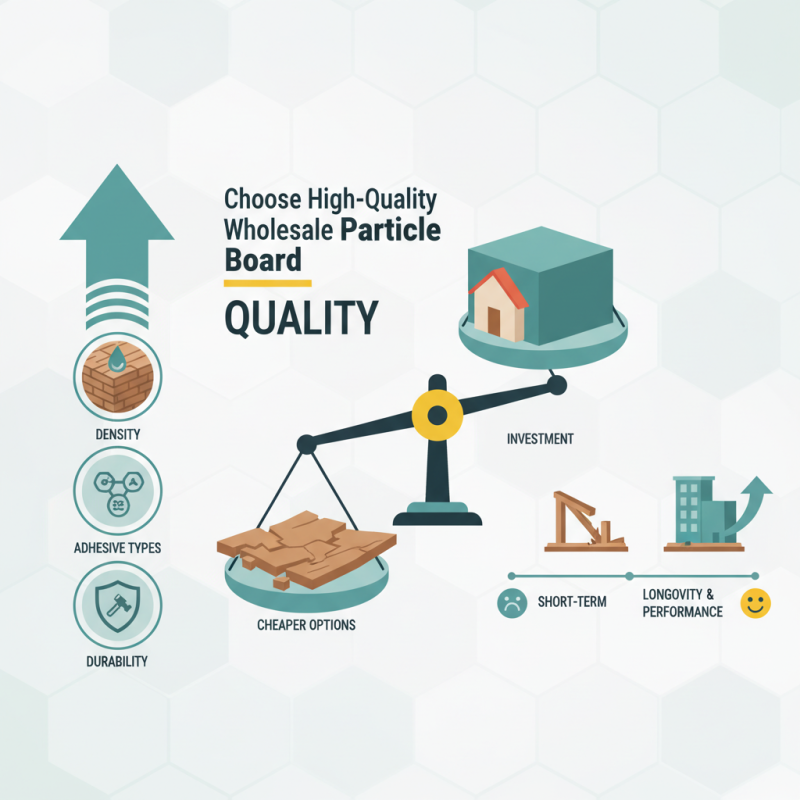
Particle Board offers versatility and cost-effectiveness but can vary widely in quality. Poor choices can lead to weak structures. It’s vital to look at the product’s density, moisture resistance, and adhesive types. Not every supplier provides the same standard. Some boards might not hold up against wear, leading to regrets down the line.
In an industry that also offers options like Mdf Board, the temptation to choose cheaper products can be strong. However, investing in high-quality Particle Board can make a significant difference in a project’s longevity and performance. It’s a decision that requires careful consideration to avoid future issues.
Understanding Particle Board: Composition and Types for Wholesale Selection
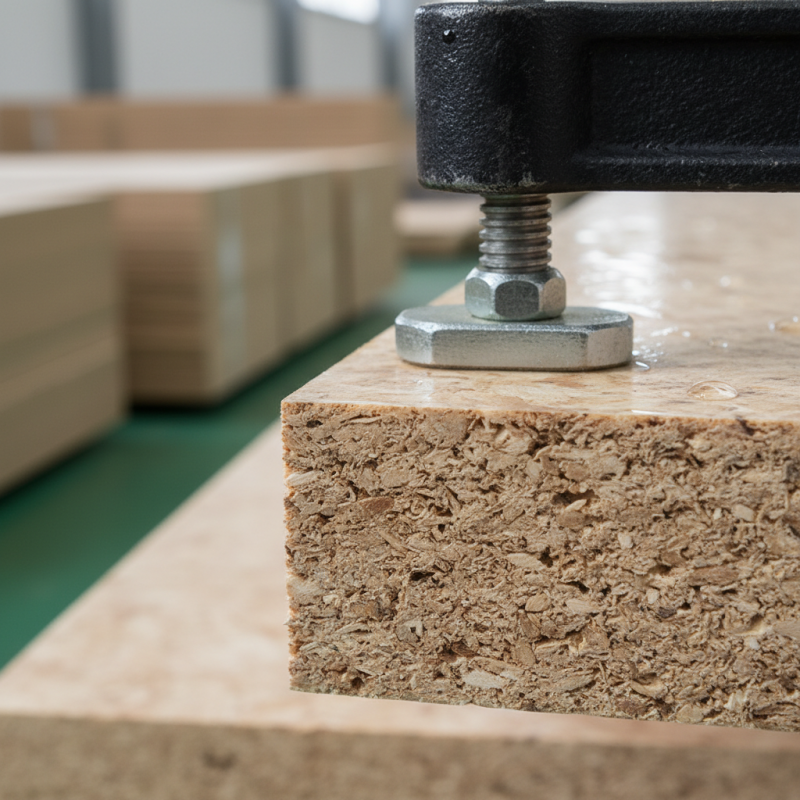
When it comes to selecting high-quality wholesale particle board, understanding its composition and types is essential. Particle board is a versatile material made from wood chips, sawmill shavings, and adhesives. It comes in various grades, each serving different purposes. Common types include standard particle board, moisture-resistant options, and high-density boards. Each type varies in durability, moisture resistance, and overall performance.
Tips: Always inspect the board's edges for splintering or imperfections. This can indicate poor manufacturing quality. Also, consider how the material fits your project needs. For instance, a moisture-resistant board might be ideal for kitchen or bathroom projects.
Pay attention to thickness and density. Some projects may require a sturdier particle board, while others might work well with lighter options. Pet Board, often used in pet furniture, showcases a balance between durability and aesthetics. Remember that even minor flaws can affect the final product. Think about where you plan to use the board. The wrong choice could lead to unnecessary costs or project delays.
Key Quality Indicators for High-Quality Wholesale Particle Board
Choosing high-quality wholesale particle board can be daunting. Several key quality indicators can guide your decision. One significant factor is the density of the board. A denser board often indicates better durability. Look for boards that provide stability under pressure. Additionally, consider the glue used in the manufacturing process. High-quality adhesives offer better moisture resistance and longevity.
Tips: Always ask suppliers for the board's specifications. A reliable supplier should provide detailed information. Don't hesitate to request samples before committing to a bulk order. Comparing various options can lead to better choices. Pay attention to the texture and finish. A smooth surface often means better performance in projects.
Another quality indicator is the certification standards. Boards that meet specific regulations typically ensure safety and environmental concern. However, not all boards will have the same ratings. Some may boast high scores, yet they might not perform well in real-life applications. Reflect on your specific project needs to make the best choice. While browsing, remember to consider Osb Board as an alternative.
Assessing Environmental Certifications and Sustainability in Particle Board
When selecting wholesale particle board, it's essential to assess its environmental certifications. These certifications confirm that the product meets specific standards in sustainability. Look for labels from recognized organizations that focus on eco-friendly materials. This can guide your decision in choosing a high-quality product that aligns with your values.
Sustainability is not just a trend; it's a necessity. Some manufacturers may claim their product is green, but it’s crucial to verify their claims. Review the board's composition. Does it contain recycled materials? What adhesives are used? Formaldehyde emissions are important to consider. The lower they are, the better for indoor air quality.
While many products look similar, the details matter. Transparency from suppliers is key. Don’t hesitate to ask questions. Sometimes, the best option may not be the most environmentally friendly one. Balancing cost and sustainability can be tricky. Reflect on your project's needs, and ensure that the choices you make contribute positively to the environment.
Comparison of Environmental Certifications in Particle Board (2023)
Evaluating Strength and Durability: Industry Standards for Particle Board
When evaluating particle board, strength and durability are critical factors. The industry offers various standards, but these can often be confusing. Look for boards that have passed rigorous testing. You should consider thickness, density, and adhesive quality. A well-made Glued Board typically resists warping and damage better than low-quality alternatives.
Different applications require different specifications. For furniture, high-density boards are preferred. They provide better support and longevity. For shelves or light-use projects, standard particle board may suffice. However, always test sample pieces before committing to a larger order. Many projects fail due to underestimating material quality.
Visual inspection is crucial. Look for uniformity in texture. Any visible flaws could lead to future problems. Remember, not all particle boards are created equal. Investigate certifications that reflect quality standards. This diligence can save money and time in the long run. Choosing the right particle board ensures a successful project outcome.
Cost vs. Quality: Analyzing Pricing Strategies for Wholesale Particle Board
When analyzing pricing strategies for wholesale particle board, it’s crucial to assess both cost and quality. Many buyers fall into the trap of choosing the cheapest option. However, this can lead to problems later on. Low-quality boards may warp or break easily. It’s essential to find a balance between price and durability.
Consider the specific requirements of your project when selecting materials. For example, Medex Board offers moisture resistance, making it ideal for humid environments. A higher upfront cost could save money in the long run. Think about how long the particle board needs to last. If the project demands high durability, investing in better quality is wise.
Still, not every expensive product guarantees satisfaction. Look for reviews and feedback from other users. A higher price tag does not always correlate with superior performance. Sometimes, mid-range products perform just as well. Be prepared to reflect on your choices and reject the idea that cheaper is always worse. Quality matters, but so does realistic budgeting.
Supplier Reputation and Reliability: How to Choose the Right Vendor
Choosing the right vendor for wholesale particle board is essential. Supplier reputation often dictates product quality. Look for vendors with positive reviews from past customers. Research online platforms and forums for feedback. Seek suppliers with a strong industry presence. Longevity in the market suggests reliability.
Ask for samples before making bulk purchases. This step helps assess quality firsthand. Also, check the vendor's certifications and compliance with industry standards. A good supplier will be transparent about their manufacturing processes. It’s wise to visit their facility if possible. This can reveal a lot about their operation.
Trust your instincts during the selection process. If something feels off, consider other options. Communication is key. A responsive vendor usually indicates good service. Evaluate their ability to meet your specific needs. Sometimes, listening to references can uncover hidden issues or strengths not readily visible online.
2026 How to Choose High-Quality Wholesale Particle Board for Your Projects?
| Criteria | Details |
| Material Quality | Check for E1 or formaldehyde-free boards, ensuring safety and durability. |
| Supplier Reputation | Research reviews and ratings from previous customers to gauge reliability. |
| Sourcing Practices | Evaluate if sustainable sourcing practices are in place for environmental responsibility. |
| Certification and Standards | Look for industry certifications that ensure adherence to quality and safety standards. |
| Customer Support | Assess the responsiveness and professionalism of the vendor’s customer service team. |
| Delivery and Lead Times | Confirm delivery schedules to ensure they meet your project timelines. |
| Pricing and Payment Terms | Compare prices and understand the payment methods and terms offered. |
Market Trends and Innovations in the Particle Board Industry for 2026
The particle board industry is undergoing significant changes in 2026. Market trends show a shift toward sustainable materials. Manufacturers are investing in eco-friendly technologies. These innovations lead to better environmental practices. It's essential to recognize these shifts. They impact the quality and availability of materials.
One trend is the increasing demand for recycled content in particle boards. Clients are looking for products that minimize waste. Producers are adjusting their processes to meet these needs. This shift may affect prices and supply chains. Companies often struggle to balance cost and sustainability. It’s not an easy task to achieve efficiency while being eco-conscious.
Another area of innovation is the use of advanced adhesives. New formulations can enhance board durability. These developments may also reduce toxicity. It’s a complex balance, as stronger adhesives often come with trade-offs. Manufacturers must be transparent about their choices. High-quality particle boards must meet both performance and safety standards. This dual focus ensures that end products remain both effective and responsible.
Exploring the Growth and Sustainability of OSB Oriented Strand Board: Insights from Recent Industry Reports and Market Trends
Oriented Strand Board (OSB) is emerging as a frontrunner in the realm of engineered wood products, demonstrating significant growth driven by its outstanding properties. OSB is crafted by cross-orienting wood strands and bonding them with eco-friendly adhesives. This manufacturing process subjects the material to high temperatures and pressures, resulting in a product that exhibits exceptional structural stability, formidable load-bearing capacity, and impressive moisture resistance. Unlike traditional plywood, OSB does not warp or crack easily, making it a reliable choice for various construction applications.
The versatility of OSB extends beyond its structural capabilities; it can be easily cut, nailed, and drilled, enhancing its adaptability for diverse projects. With certifications that meet international environmental and quality standards, OSB stands out as a durable and cost-effective alternative for both industrial and custom applications. From furniture framing to floor substrates and packaging, its robust design is well-suited for construction engineering and outdoor environments, cementing its reputation as a premium choice in the building materials landscape. As the industry trends indicate a growing preference for sustainable and high-performing materials, OSB is poised to play a pivotal role in shaping the future of construction and manufacturing.
FAQS
: The product aims to improve user convenience and enhance everyday experiences.
It is designed for simplicity, but some users may need time to adapt.
While it suits many, certain features may not be ideal for all age groups.
Users sometimes report confusion with initial setup and configuration.
Yes, there is support, but the response time can vary.
Regular cleaning is recommended, though users often forget this step.
Troubleshooting guides are available, but some issues may require professional help.
Updates occur periodically, but not all users may notice improvements.
User input is welcomed, yet many suggestions may go unheard.
A warranty exists, although its terms can be confusing to some users.
Conclusion
The article "2026 How to Choose High-Quality Wholesale Particle Board for Your Projects?" provides a comprehensive guide for selecting top-notch particle board in wholesale settings. It begins by explaining the composition and various types of particle board available, which is crucial for making informed purchasing decisions. Key quality indicators are explored, highlighting what distinguishes high-quality particle board from inferior options.
Additionally, the article discusses the importance of environmental certifications and sustainability practices within the particle board industry. Evaluating the strength and durability of the boards according to industry standards is emphasized, along with a cost versus quality analysis to help buyers find the best value. Choosing reliable suppliers and understanding current market trends and innovations are also critical components to navigate the evolving landscape of particle board for 2026.

 1Durch die gruppenweite Einführung und Harmonisierung unseres integrierten Managementsystems (IMS) werden alle bestehenden Unternehmens-, Qualitäts-, Umwelt- und Energiepolitiken durch diese Unternehmenspolitik ersetzt. Der Slogan „Textil hat Zukunft – auch in De