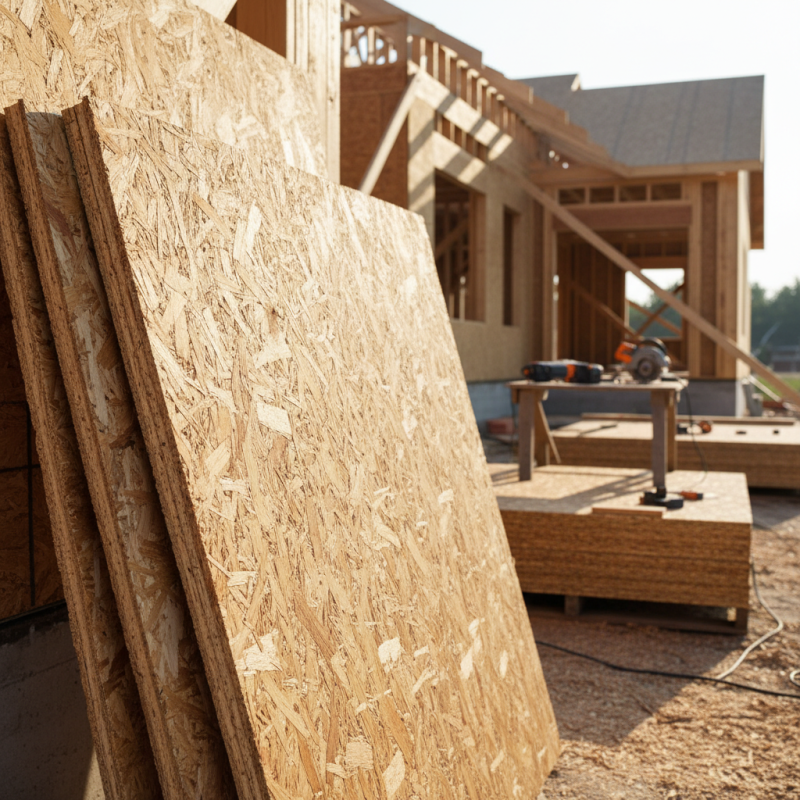
You’ve probably heard about Oriented Strand Board, or OSB for short, and it’s definitely becoming pretty popular in construction lately. A lot of builders are opting for Osb Board because it’s not only cost-effective but also really strong. Basically, it’s an engineered wood product made from small wood strands that are bonded together under heat and pressure. That process gives the material some serious durability and makes it perform well in lots of different applications.
If you’re thinking about what building materials to use, OSB has some pretty big advantages. For starters, the way it’s made means that raw materials are used efficiently, which is a big plus. It can support high loads, so it’s perfect for things like flooring, walls, and roofing. But, a quick heads-up—since OSB is sensitive to moisture, you’ve gotta be careful with it during installation and in moist environments.
All in all, the increasing use of OSB shows how reliable it has become for various construction needs. Builders love that it can handle different project requirements without breaking the bank. Picking the right materials really can make a big difference in the success of a project down the line. And exploring options like OSB might just open the door to some pretty innovative, sustainable building solutions—something worth considering if you're aiming for smarter, more eco-friendly construction.
Oriented Strand Board (OSB) is gaining popularity in construction and manufacturing. Its unique characteristics set it apart from other materials. OSB comprises wood strands bonded together with adhesives, creating a strong, durable panel. This structure provides excellent strength under load, making it ideal for flooring, walls, and roofs.
One of the key features of OSB is its resistance to moisture. Unlike Mdf Board, which can swell when wet, OSB can withstand humidity better. However, it’s not entirely waterproof. It's crucial to consider proper sealing techniques for outdoor projects. This ensures longevity and stability.
Another notable aspect is sustainability. OSB is made from fast-growing trees, promoting environmentally friendly practices. But, be mindful of sourcing. Not all OSB products maintain high environmental standards. Regular inspection for defects is essential. While OSB is versatile, it may not be suitable for every application. Understanding its limits helps in making informed choices.
Oriented Strand Board (OSB) is a popular construction material recognized for its cost-effectiveness. According to the Engineered Wood Association, OSB can be up to 30% cheaper than plywood. This significant cost difference makes OSB an appealing choice for builders working on tight budgets. Many construction projects benefit from using OSB in structural applications, as its material properties provide excellent support for walls and roofs.
OSB offers durability and strength at a fraction of the cost of traditional board materials. A study by the USDA Forest Products Laboratory found that OSB has similar structural performance to plywood. This makes it a reliable option for residential and commercial projects alike. However, some installers express concerns about OSB's moisture resistance compared to plywood. Projects in high-humidity areas should consider this factor when selecting materials.
Despite some drawbacks, OSB remains a reasonable choice, especially for non-exposed applications. Its affordability and strength allow builders to allocate funds to other essential aspects of construction. As the market continues to evolve, exploring alternative materials and methods will be key for optimizing construction costs. The balance between cost and performance remains crucial in choosing the right materials.
Oriented Strand Board (OSB) is increasingly recognized for its environmental sustainability. Made from layers of wood strands, OSB utilizes small wood pieces efficiently. This process minimizes waste by using faster-growing trees. These trees will renew more quickly than traditional lumber sources.
Using OSB also supports sustainable forestry practices. Many manufacturers source wood from managed forests. This ensures that for every tree cut down, new ones can be planted. This circular approach promotes ecological balance. In construction, OSB has a lower carbon footprint. Its lightweight nature requires less energy during transportation.
Reflecting on the production methods reveals room for improvement. Some OSB products may contain adhesives harmful to indoor air quality. Choosing options that comply with strict standards can mitigate this issue. In recent years, the rise of eco-friendly alternatives like Pet Board offers solutions that focus on enhanced bioproducts. Overall, OSB remains a commendable choice for sustainable building while continually pushing for more eco-conscious developments.
Oriented Strand Board (OSB) stands out for its versatility across various applications in construction. Research from the Structural Board Association highlights that OSB's strength-to-weight ratio makes it ideal for everything from wall sheathing to flooring solutions. Its ability to perform well in humid and wet conditions is critical for many projects, as moisture resistance can significantly enhance durability.
For builders and hobbyists alike, here’s a tip: considering the environment of your project can guide your choice of OSB thickness and type. Thicker boards tend to offer better insulation and noise control. Data indicates that using thicker OSB can improve the structural integrity of a building by up to 25%.
OSB’s environmentally friendly properties add to its appeal. It consists of fast-growing trees, which makes it a renewable resource. However, not all OSB products are created equal. Some variations may use adhesives that are less eco-friendly. It's essential to check for certifications that ensure the product meets sustainability standards. Always research to find options that align with your environmental values.
| Benefit | Description |
|---|---|
| Cost-Effective | OSB offers a competitive pricing structure compared to plywood, making it a budget-friendly option. |
| Sustainable | Made from fast-growing trees, OSB is considered an environmentally friendly building material. |
| Strength | Provides excellent tensile strength, making it suitable for load-bearing applications. |
| Versatility | OSB can be used in various applications, including flooring, roofing, and wall sheathing. |
| Consistency | Manufactured to uniform specifications, ensuring consistent quality and performance. |
| Moisture Resistance | Specially treated OSB is designed to resist moisture and reduce swelling and warping. |
| Ease of Use | Lightweight and easy to cut, OSB can be manipulated quickly on job sites. |
| Thermal Efficiency | Provides good insulation properties, helping to maintain temperature in buildings. |
| Compatibility | Adapts well with various other building materials in different construction methods. |
Oriented Strand Board (OSB) has gained recognition for its structural strength and durability. This engineered wood product is made from strands of wood layered and bonded with adhesives. Since its introduction, OSB has become a popular choice in construction due to its reliable performance in various conditions.
One of the key advantages of OSB lies in its incredible load-bearing capacity. It stands up to heavy weights without warping or breaking, thanks to its unique bonded structure. Contractors often prefer OSB for subflooring, wall sheathing, and roofing applications. It can resist moisture better than traditional plywood, making it suitable for different climates.
However, it's worth noting that not all OSB products are created equal. Some may not perform well under extreme conditions, leading to potential long-term issues. Glued Boards should be selected carefully to ensure they meet specific project needs. While OSB is a robust option, it is essential to consider factors like installation techniques and environmental exposure to maximize its effectiveness. Choosing quality OSB is crucial for durability in construction projects.
Oriented Strand Board (OSB) has gained popularity in construction due to its ease of installation and handling. Its lightweight structure allows for swift maneuvering on job sites. According to industry studies, OSB is 20% lighter than plywood, facilitating transport and reducing worker fatigue. This lightweight nature means fewer workplace accidents and increased efficiency during construction.
Installation is straightforward, often requiring fewer tools and equipment than other materials. For example, OSB panels can be easily cut and shaped with standard saws, allowing versatility for various projects.
Studies show construction times can be reduced by up to 30% when using OSB compared to heavier alternatives. However, not all construction teams are fully trained in OSB handling techniques, which can lead to mistakes.
Proper training ensures panels are installed correctly, optimizing their structural integrity.
Despite its advantages, OSB does have drawbacks. It can absorb moisture, which may affect its performance over time. Additionally, improper handling can lead to surface damage.
Homebuilders and contractors need to weigh these considerations against OSB's many benefits. It's crucial for teams to have thorough knowledge of OSB's characteristics to maximize its potential.
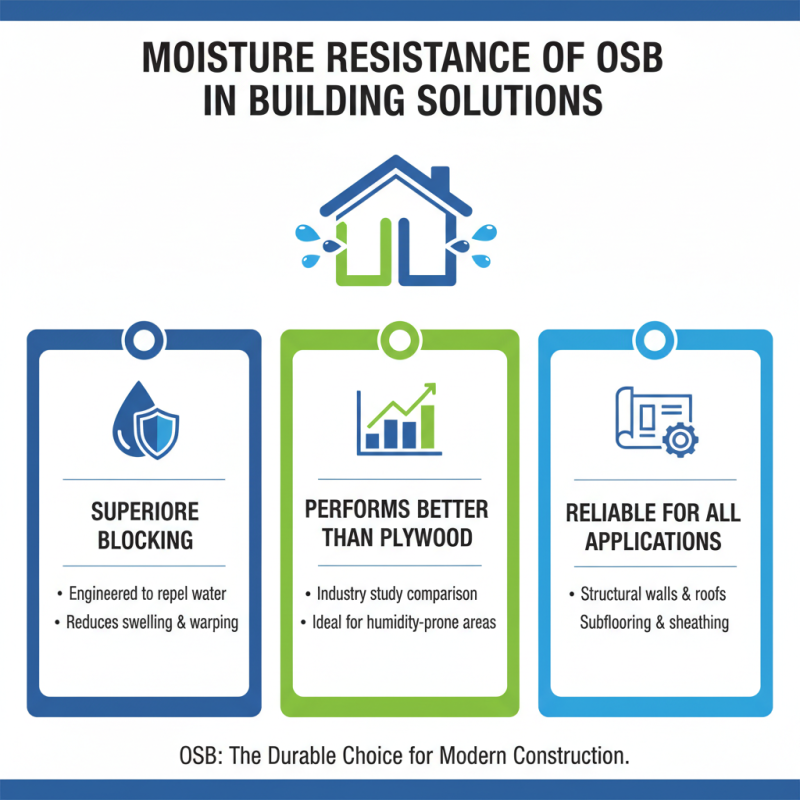
Oriented Strand Board (OSB) has gained popularity due to its exceptional moisture resistance. This quality is crucial in building projects, especially in areas prone to high humidity or moisture exposure. An industry study showed that OSB can withstand moisture levels better than traditional plywood. This makes OSB a reliable choice for both structural and non-structural applications.
The moisture-resistant properties of OSB are thanks to its unique manufacturing process. Wood strands are bonded with resin and compressed, creating a sturdy board that resists swelling. According to the Forest Products Laboratory, OSB can perform well in humid conditions, minimizing the risk of mold and decay. This feature enhances the durability of structures, making OSB a smart investment for building projects.
Tips: When selecting materials, consider the environment. Regions with high rainfall or humidity may require extra precautions. While OSB is generally reliable, pairing it with water-resistant sealants can improve performance. It's also worth noting that while OSB is moisture-resistant, improper installation can lead to issues.
For those considering alternatives, Medex Board offers significant moisture resistance as well. However, OSB remains a front-runner in affordability and versatility. Always ensure that your chosen material meets the specific needs of your project to prevent long-term complications.
: OSB is a strong, durable panel made from wood strands bonded with adhesives. It is popular in construction.
OSB generally withstands moisture better than traditional plywood. However, it is not completely waterproof.
Yes, OSB performs well in humid conditions but requires proper sealing to enhance durability.
OSB is made from fast-growing trees. However, ensure it meets high environmental standards before purchasing.
No, not all OSB products perform equally. Some may have problems under extreme conditions.
Installation is crucial. Improper techniques can lead to issues, even though OSB is robust.
Consider the environmental conditions and ensure the OSB meets your specific needs for durability.
Yes, OSB's load-bearing capacity makes it a good choice for roofing, among other applications.
Yes, regular inspection for defects is essential to avoid potential long-term issues.
Pairing OSB with water-resistant sealants can enhance its moisture protection in vulnerable environments.
Oriented Strand Board (OSB) is a highly versatile building material that offers numerous benefits for construction projects. Its key characteristics include impressive structural strength and durability, making it suitable for a wide range of applications. OSB is also cost-effective compared to other materials, allowing builders to optimize their budgets while maintaining quality.
Moreover, OSB exemplifies environmental sustainability, as it is made from fast-growing wood species and often incorporates recycled materials. Its moisture resistance features make it an ideal choice for various building solutions, ensuring resilience in different climates. Additionally, the ease of installation and handling of OSB contributes to efficient project workflows, solidifying its reputation as a go-to material in modern construction.